
Frequently Asked Questions
.
Frequently Asked Questions (FAQs)
07 - Is Ultra-Deep Geothermal (UDG/EGS) different from conventional geothermal?
For the purpose of this website, geothermal energy can be broadly divided into three categories:
Cat.1: individual households | 90-300m | 10-15°C
Cat.2: industrial applications (e.g. large scale greenhouses) | 2-4km | 90-120°C
Cat.3: Ultra-Deep Geothermal Energy (EGS) (the new category) | 3-20km | 400-600°C
Please note that:
- Category 3 (UDG/EGS) represents a paradigm shift and is fundamentally incomparable to the other categories.
- Depth is geology-dependent. SuperHot conditions may occur at a few kilometres in highly active geothermal regions, while substantially greater depths may be required in continental settings.
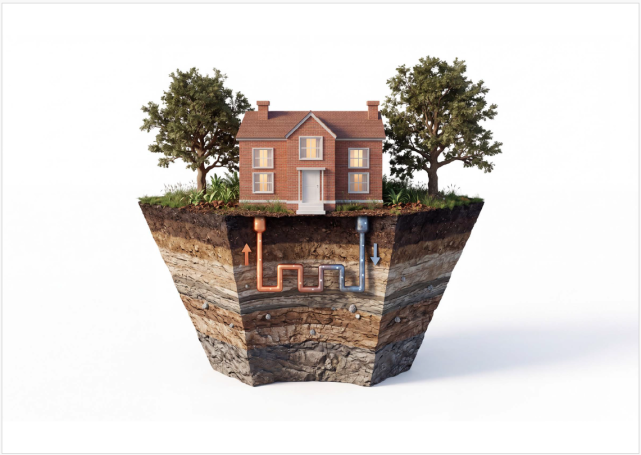
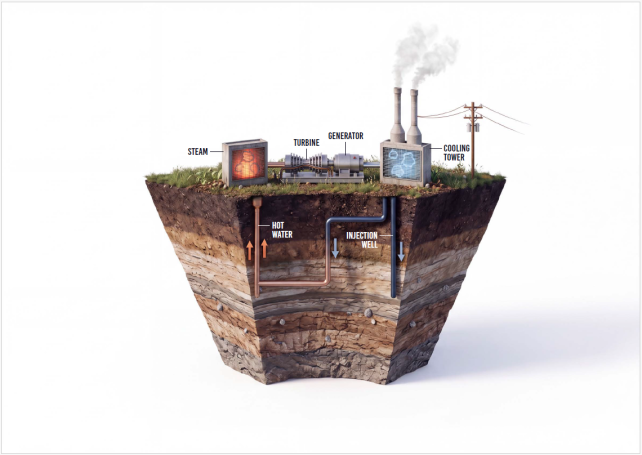
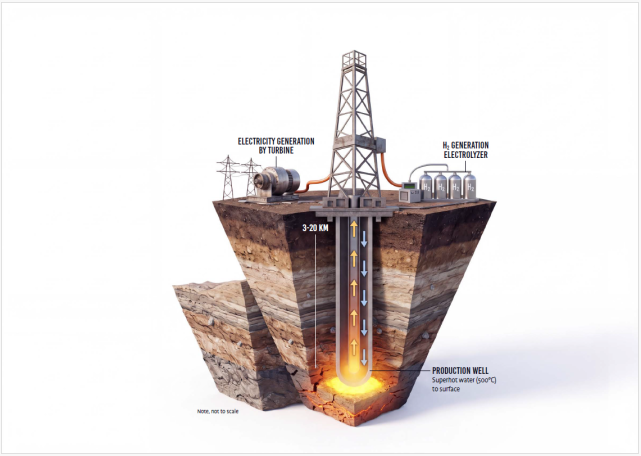
Category 1 (household) Category 2 (industrial) Category 3 (UD Geothermal)
Understanding Geothermal Energy: The Three Core Categories
Geothermal energy is a powerful, reliable, and sustainable source of renewable energy. By tapping into the natural heat stored beneath the Earth's surface, it provides continuous energy regardless of weather conditions. Depending on the drilling depth and the operational temperature received for heating or power generation, geothermal energy is classified into three distinct categories.
Category 1: Shallow Geothermal Energy for Individual Households
- Drilling depth: 90 - 300 meters
- Operational temperature: 10°C - 15°C
- Primary application: residential heating and cooling
This category utilizes the stable, low-temperature heat found just beneath the Earth's surface. It is primarily deployed via ground-source heat pumps for individual households. By extracting heat in the winter and transferring heat back into the ground during the summer, it provides a highly efficient and decentralized climate control solution for residential buildings.
Category 2: Deep Geothermal Energy for Industrial Applications
- Drilling depth: 2 - 4 kilometers
- Operational temperature: 90°C - 120°C
- Primary application: large-scale industrial heat (e.g. commercial greenhouses)
Deep geothermal energy taps into deeper hot water reservoirs (aquifers) to directly harness significant thermal energy. With temperatures reaching up to 120°C, this category is the ideal solution for high-energy-demand sectors. It is widely used to power large-scale district heating networks and commercial greenhouse agriculture, offering a reliable alternative to fossil fuels for heavy heat consumers.
Category 3: Ultra-Deep Geothermal Energy / Enhanced Geothermal Systems (UDG/EGS)
- Drilling depth: 3 - 20 kilometers
- Operational temperature: 400°C - 600°C
- Primary application: high-grade industrial heat and large-scale / SMR-scale power generation
This new category represents a fundamental paradigm shift in the energy sector and is entirely incomparable to the other two traditional geothermal methods. Instead of relying on natural water reservoirs, UDG/EGS unlocks the intense, ultra-deep heat from supercritical water of the Earth's crust. Reaching unprecedented depths and temperatures up to 600°C, this breakthrough technology transforms geothermal energy from a localized heat source into a limitless, baseload power solution capable of generating clean electricity anywhere on the planet.
FAQ-20 explains in more detail the differences in terminologies and techniques between UDG and EGS.